Crypto markets are unforgiving. One bad trade, one overlooked risk, one moment of emotional decision-making — and a significant portion of your capital can vanish overnight. This guide walks you through the core principles actionable strategies of crypto risk management, covering position sizing, stop-loss discipline, portfolio diversification, psychological traps, and more. Whether you're a beginner or a seasoned trader, understanding how to manage risk isn't optional — it's the difference between surviving and thriving in these.
Why Risk Management Is Non-Negotiable in Crypto
Cryptocurrency operate 24/7, with volatility levels that dwarf traditional asset classes. Bitcoin can swing10% in a single hour Altcoins can lose 80% of their value in days. Unlike stock markets, there are no circuit breakers, no regulators stepping in to stabilize prices, and no guaranteed recovery. This environment rewards those who respect risk systematically destroys those who ignore it.
Most traders who blow up their accounts don't fail because they lack knowledge of technical analysis. They fail because they take on too much risk, hold losing positions too long, and let emotions drive their decisions. A robust risk management framework is the foundation every serious crypto trader must build before thinking about profits.
Position Sizing: Never Risk More Than You Can Afford to Lose
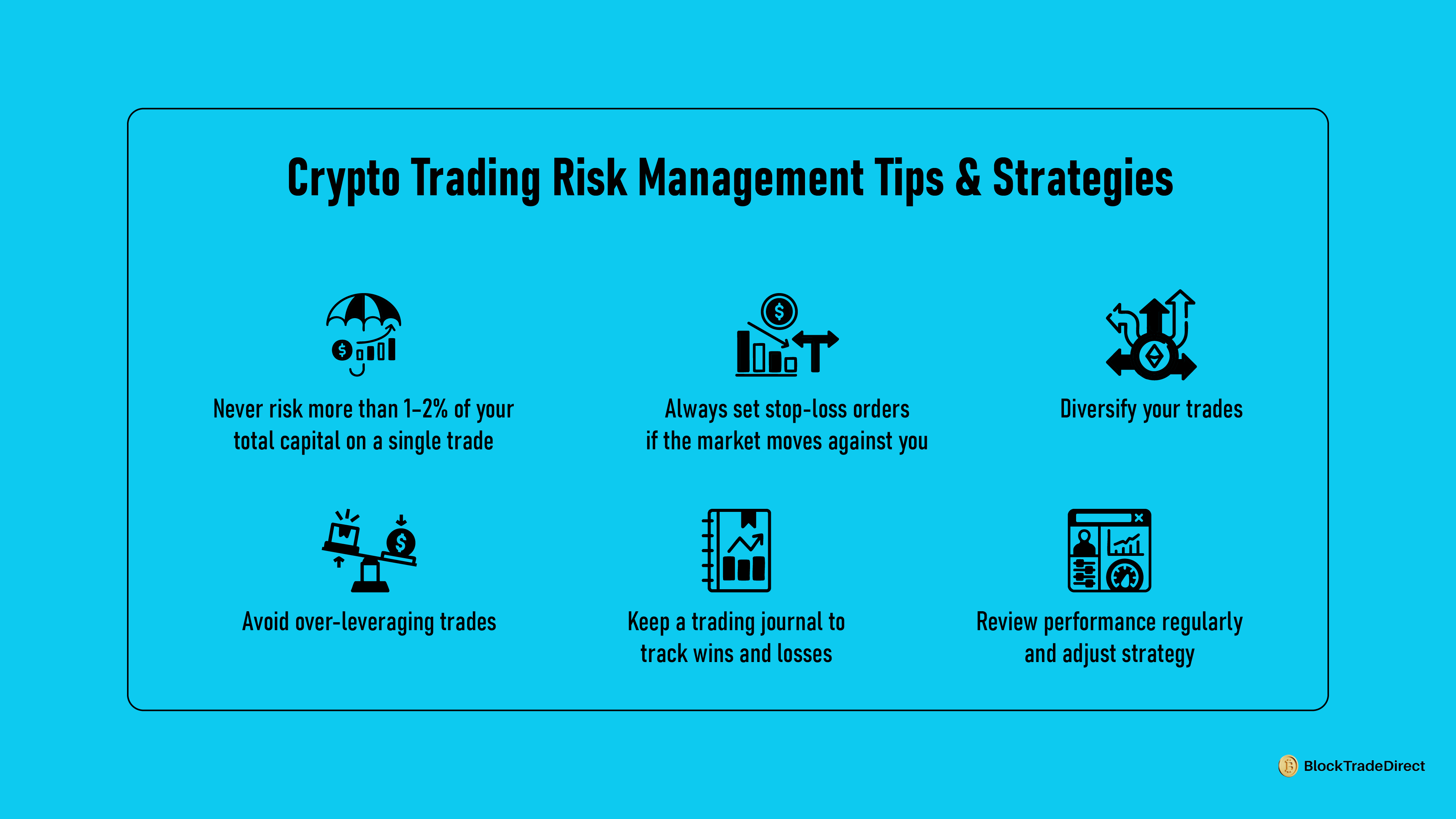
Position sizing is arguably the single most important element of risk management. It determines much capital you allocate to any single trade. The widely accepted rule among professional traders is to never risk more than 1% to 2% of your total trading capital on a single position. This means if your portfolio is worth $10,000, you should not risk more than $100 to $200 on any one trade.
This approach ensures that even a string of consecutive losses doesn't wipe you out. Suppose you experience10 trades in a row — rough but plausible scenario. If you risked 2% per trade, you'd still retain roughly 82% of your capital. Risk per trade and same streak leaves you with less than 35% remaining The math brutal unambiguous.
To calculate size correctly, you need to know your entry point, your stop-loss level, and the dollar amount you're willing to lose. Divide your maximum dollars by the distance between your entry and stop-loss in terms. That gives you the number of units you can safely trade.
Stop-Loss Orders: Your Last Line of Defense
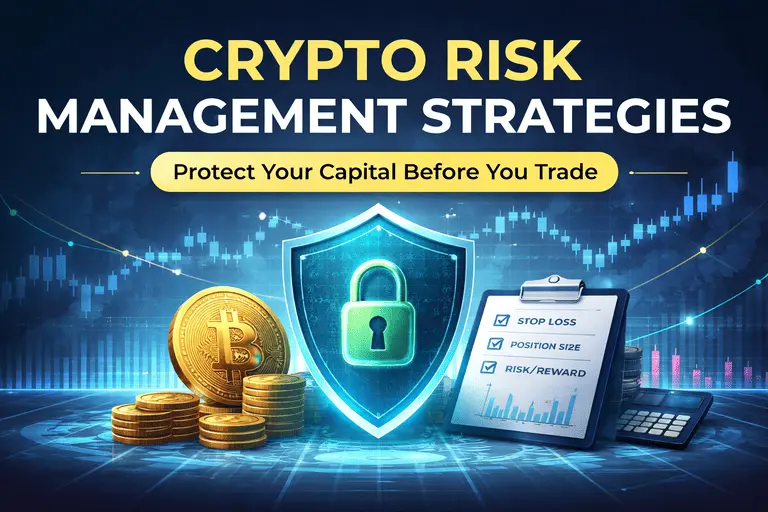
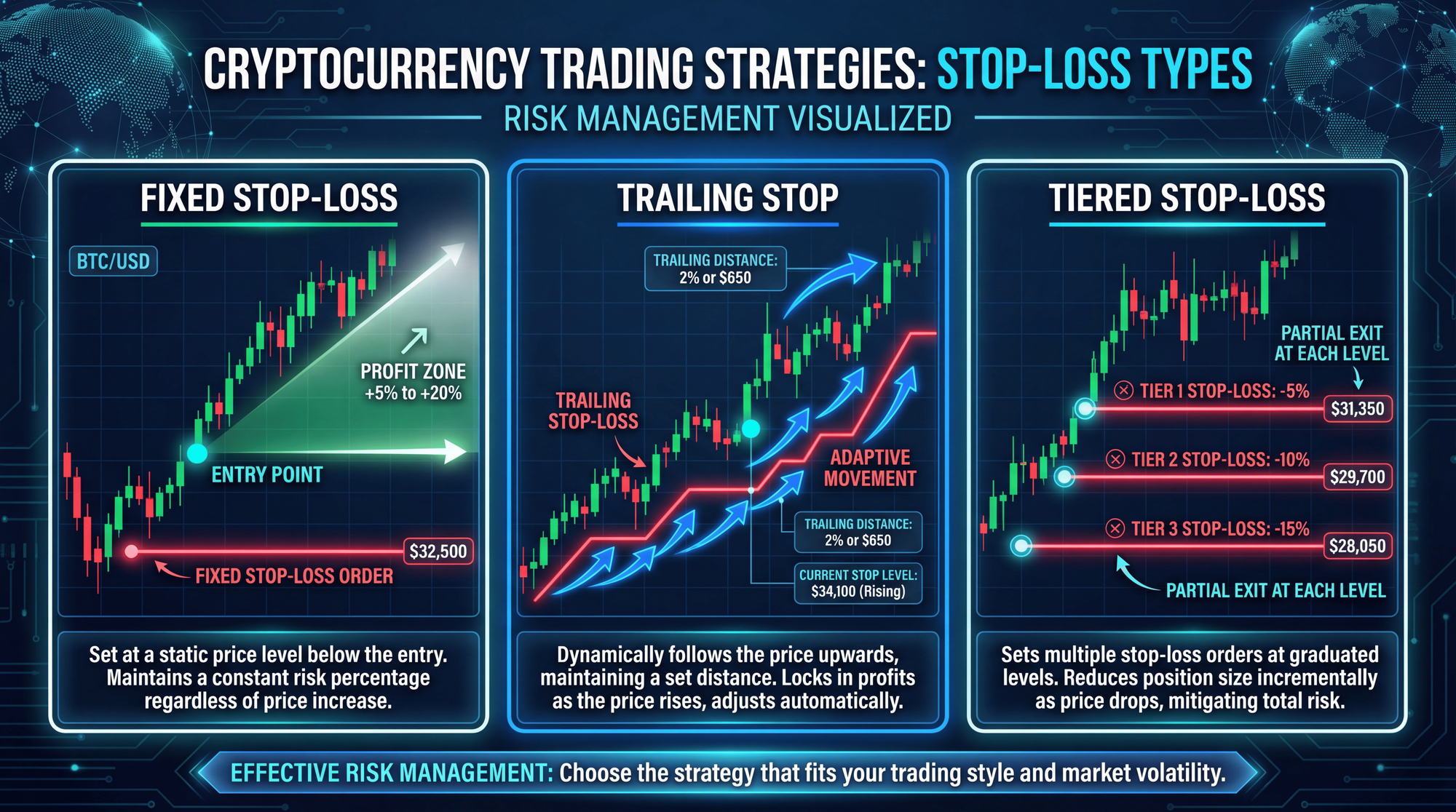
A stop-loss order automatically closes your position when the price hits a predetermined level capping your downside. In crypto, where move fast don't sleep, stop-losses are essential. Not using them is the equivalent of driving without a seatbelt — fine until it isn't.
Hard stop-losses are placed directly on the exchange execute automatically Mental stop-losses — where you promise yourself you'll exit at a certain level — are unreliable because human psychology routinely overrides that promise when real money is on the line. Always use hard stops
When placing stop-losses, give trade enough room to breathe. Setting a stop too tight, just below small level, often results in getting stopped out by normal price noise before the trade has chance to develop. Use Average True Range (ATR) as a reference for setting stop distances reflect actual market volatility rather than arbitrary round numbers.
Diversification and Portfolio Allocation
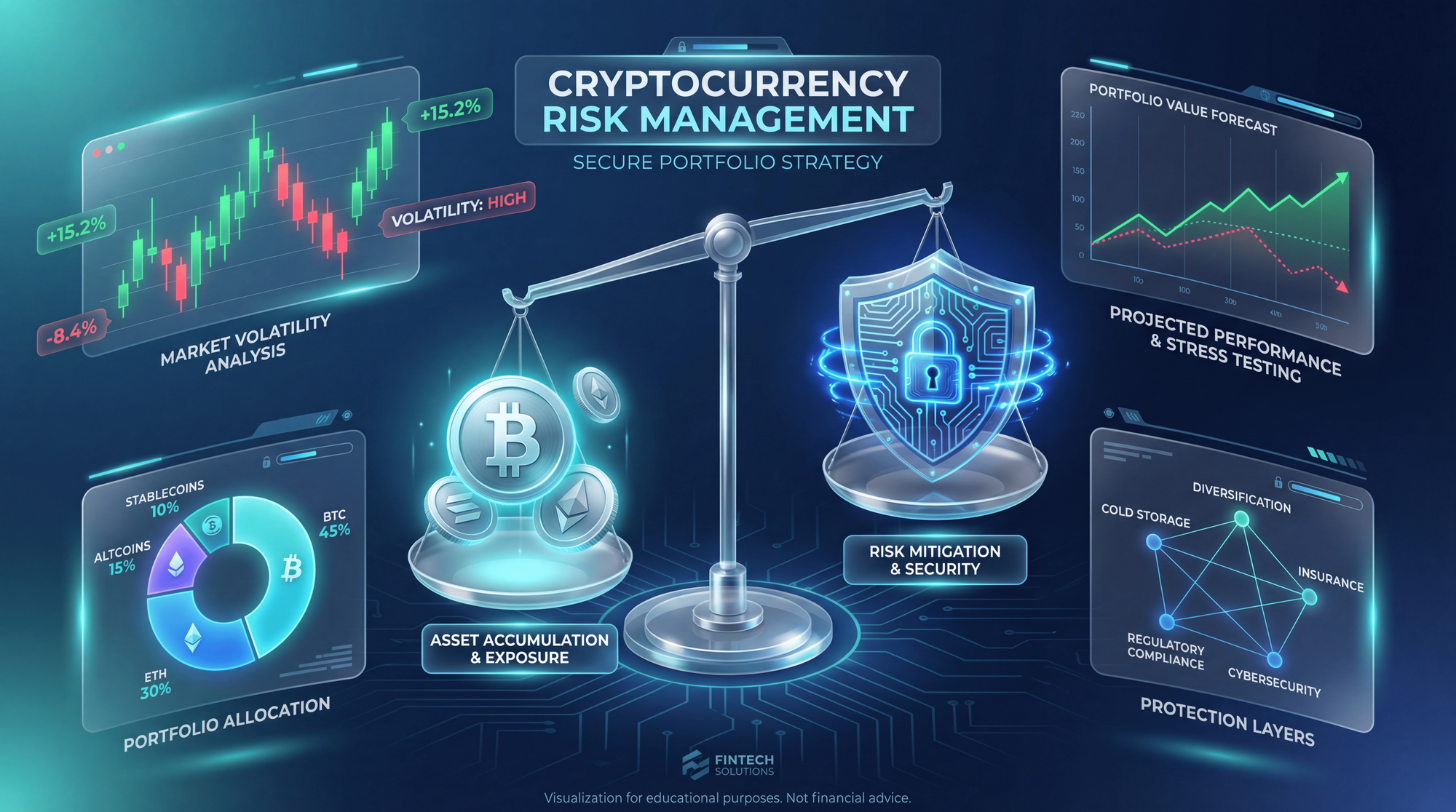
Diversification in crypto doesn't mean buying50 different altcoins. In broad market sell-off, nearly all cryptocurrencies fall together correlation spikes toward1.0. True diversification in this space means spreading risk across different asset categories: large-cap assets like Bitcoin and Ethereum as core holding, a smaller allocation to mid-cap projects with genuine utility, and an even smaller speculative allocation to high-risk, high-reward plays.
Many experienced traders also portion of their portfolio in stablecoins. This serves two purposes: it preserves capital during downturns and positions you to buy quality assets at discounted prices when correct. Holding20% 30% in stablecoins during uncertain market conditions is a legitimate often overlooked risk management tool src="https://d3iuzwoiyg9qa8.cloudfront.net/webadmin/storage/public/posts/January2026/posts_1769235877_1425.webp" alt="Crypto risk management best practices showing diversified portfolio strategy and digital asset allocation" />
Leverage A Weapon That Cuts Both Ways
Leverage amplifies both gains and losses. A 10x leveraged position means 10% against you results in a total loss of your margin. In crypto, moves happen regularly sometimes within a single candle on chart. This is why the majority of retail use high leverage eventually get liquidated.
If you choose to use leverage at all, keep it lowx 3x maximum traders, zero leverage for anyone still learning. Exchanges offer up to 100x leverage as a product, but availability not endorsement. The house always benefits when retail traders over-leverage, becauseations generate fees rarely moves in perfectly timed ways that favor inexperienced participants.
The Psychological Dimension
Risk management is as much about psychology as it is about math. Fear and greed are the two forces that consistently push traders into poor decisions. Fear causes premature exits on winning trades and panic selling at worst possible moment. Greed causes overexposure, chasing pumps, and holding positions in the hope of a reversal that never comes.
Developing a written plan entering any position is one of the most effective ways to counter emotional interference. The plan should define your entry criteria, position size, stop-loss level, and profit targets you put any money at risk. Once, your only job is to follow the plan — not to improvise based on the latest action or social media sentiment.
Journaling your trades is equally powerful Reviewing past trades reveals patterns in your decision-making — situations where you consistently deviate from your plan, asset types you over-trade, or times of day when your judgment is compromised. This kind of honest self-analysis is what separates traders who improve over time from those who repeat the same costly mistakes.
RiskReward Ratio: Only Take Trades Make Sense
Before entering any trade, calculate the risk-reward ratio. If you're risking $100 to potentially make $150 ratio is 1:1.5. Most traders target minimum ratio of 1:2 meaning the potential reward is at least double the risk. At ratio, you only need to be right half trades to be profitable after accounting for losses.
A common mistake is entering with poor risk-reward ratios because setup "looks good" or because FOMO after a price already made a significant move. If favorable entry passed the risk-reward no longer makes sense, the discipline skip the trade entirely and wait for the next opportunity. Patience is a risk
Security Protecting Your Assets from External Threats
Risk crypto isn't limited to price movements. Security a category that has cost industry billions of dollars. Exchange hacks, phishing attacks, SIMswapping, and smart contract exploits are all real threats that can zero out a portfolio regardless of how well you managed your trading
Use hardware wallets for long-term holdings. Never store significant amounts exchange hot wallets beyond what you need for active trading. Enable two-factor authentication on all accounts using an authenticator app rather than SMS. Be skeptical of every link every DM offering unrealistic returns, and every "official" support contact reaching out to you unsolicited. The space attracts sophisticated actors, and the responsibility for security rests almost entirely on the individual userRegulatory and Liquidity RiskRegulatory risk refers to the possibility that government actions bans, restrictions, unfavorable legislation — negatively impact the value or accessibility of crypto assets. Different jurisdictions have taken vastly different approaches to crypto regulation, and landscape continues to evolve. Staying informed about regulatory developments in your jurisdiction diversifying across assets different regulatory profiles reduces exposure to any single regulatory event.
Liquidity risk is often overlooked by newer traders. Smallcap tokens can appear to have attractive setups on, but when you try to exit position, the order book is thin and your own selling creates slippage. Always assess average daily trading volume of any asset relative to the size of your intended position. If position represents more than a small fraction of average daily volume, liquidity risk is substantialConclusionSuccessful crypto trading built on a foundation of disciplined risk management, finding magic indicator or predicting the next breakout. Keeping sizes small, using hard-losses every single time, maintaining realistic risk-reward ratios, controlling leverage,ifying intelligently, and protecting your assets from security threats are the pillars that keep capital intact long skill strategy to compound. The market will always create new opportunities Your job is to still have those opportunities arrive.
Crypto Risk Management 101 | FINESTEL
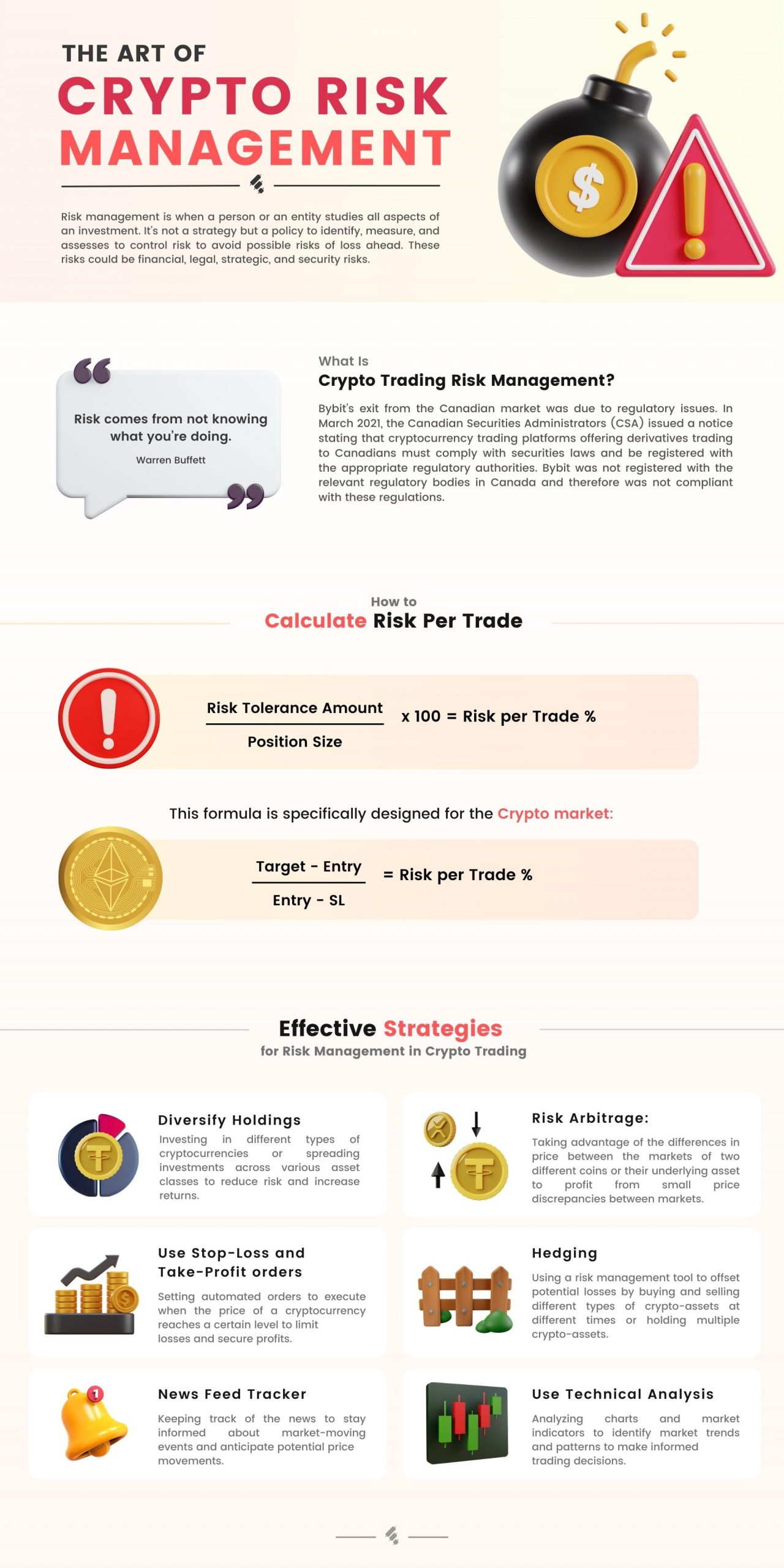
Crypto Risk Management 101 | FINESTEL
Cryptocurrency Risk Management: A Comprehensive Guide To Effective Risk
Cryptocurrency Risk Management: A Comprehensive Guide To Effective Risk ...
Crypto Risk Management: 7 Strategies To Protect Your Portfolio
Crypto Risk Management: 7 Strategies to Protect Your Portfolio
Risk Management Explained: Objectives And Processes
Risk Management Explained: Objectives And Processes
Bridging Risk Audits For Cross-Chain Bridges

Bridging Risk Audits for Cross-Chain Bridges
PPT - How A Crypto Trading Investment Company Operates: An Overview

PPT - How a Crypto Trading Investment Company Operates: An Overview ...
10 Essential Risk Management Strategies Crypto Trader Must Know
10 Essential Risk Management Strategies Crypto Trader Must Know ...
Risk Management In Crypto: Complete Framework For Digital Assets | Stoic.ai
Risk Management in Crypto: Complete Framework for Digital Assets | stoic.ai
Crypto Risk Management Strategies For Nigerian Traders
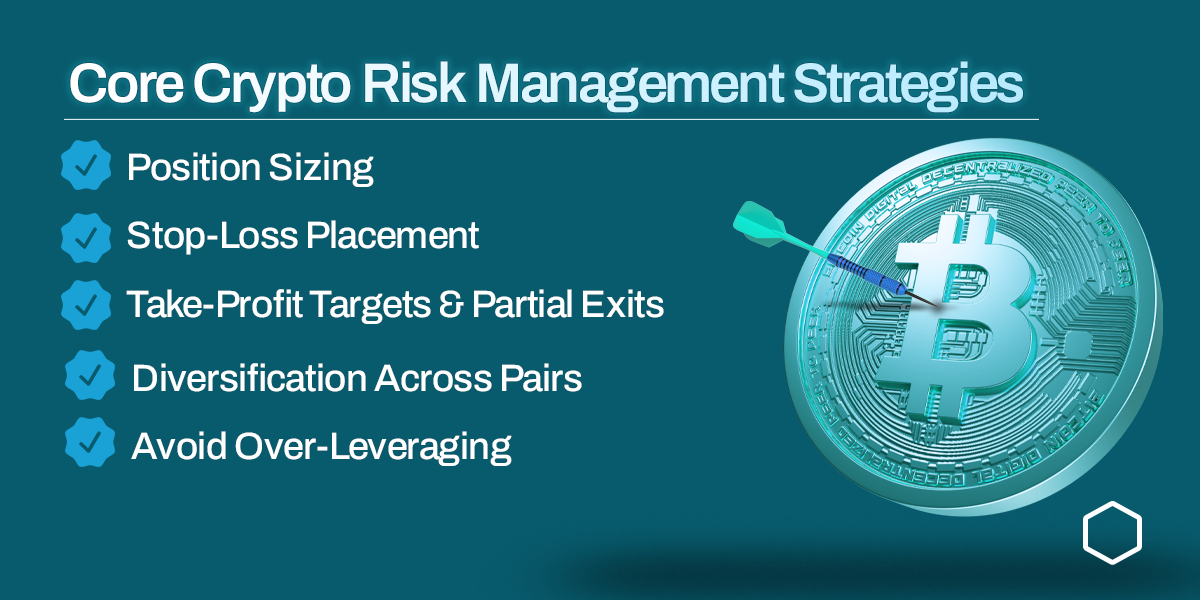
Crypto Risk Management Strategies for Nigerian Traders
Best Crypto Risk Management Strategies For Traders

Best Crypto Risk Management Strategies for Traders
Mastering Crypto Asset Allocation For Financial Advisors - Web3 Enabler
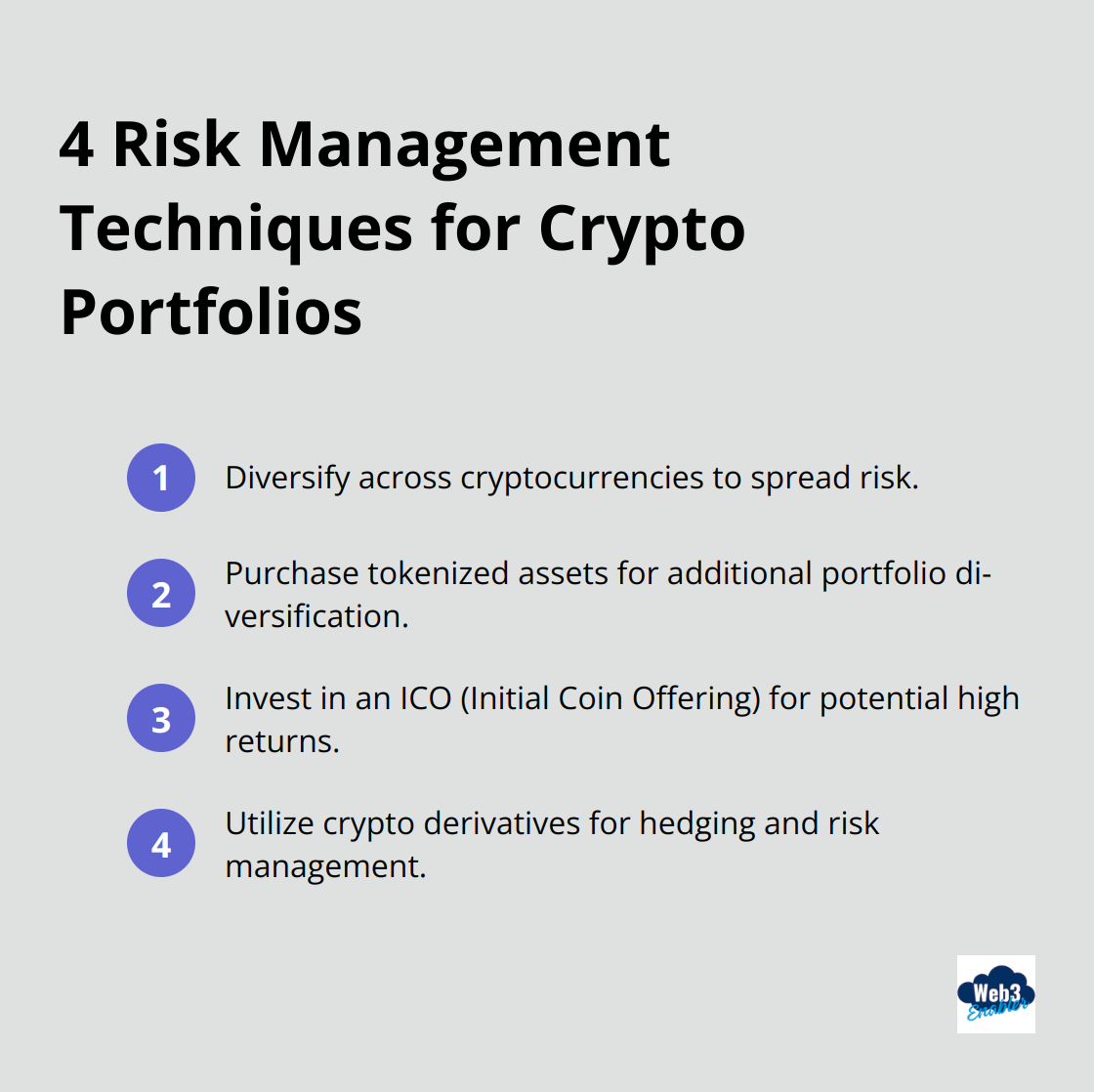
Mastering Crypto Asset Allocation for Financial Advisors - Web3 Enabler
How To Manage Risk In Crypto Trading: Complete Guide 2026
How to Manage Risk in Crypto Trading: Complete Guide 2026
Risk Management In Crypto Trading | By Crypto_SAK | Medium

Risk Management in Crypto Trading | by Crypto_SAK | Medium
Crypto Risk Management Strategies (Stops, Position Size, Drawdowns
Crypto Risk Management Strategies (Stops, Position Size, Drawdowns ...
Risk Management Tips For Cryptocurrency Trading: Lesson 4 | Walbi Blog

Risk Management Tips for Cryptocurrency Trading: Lesson 4 | Walbi Blog
Effective Risk Management In Cryptocurrency Trading: Tips For Profits

Effective Risk Management in Cryptocurrency Trading: Tips for Profits ...
How To Manage Risk In Crypto Trading: Complete Guide 2026
How to Manage Risk in Crypto Trading: Complete Guide 2026
PPT - 5 Essential Risk Management Strategies For Crypto Trading Bots

PPT - 5 Essential Risk Management Strategies for Crypto Trading Bots ...
Risk Management 101: How To Protect Your Capital In Crypto Trading

Risk Management 101: How to Protect Your Capital in Crypto Trading ...
Best Cryptocurrency Risk Management Tips With AI - Blockchain Council

Best Cryptocurrency Risk Management Tips with AI - Blockchain Council
Essential Cryptocurrency Risk Management Techniques: A Beginner's Guide

Essential Cryptocurrency Risk Management Techniques: A Beginner's Guide ...
Crypto Risk Management Strategies - On Tilt Trading
Crypto Risk Management Strategies - On Tilt Trading
Risk Management Strategies For Crypto Assets

Risk Management Strategies for Crypto Assets
Crypto Risk Management Strategies That Actually Work | Thrive
Crypto Risk Management Strategies That Actually Work | Thrive
How To Manage Daily Risks In Crypto Trading: A Comprehensive Guide
How to Manage Daily Risks in Crypto Trading: A Comprehensive Guide ...
Crypto Exchange | Bitcoin Exchange | Bitcoin Trading | KuCoin
Crypto Exchange | Bitcoin Exchange | Bitcoin Trading | KuCoin
Crypto Trading Mistakes That Can Cost You Big: How To Avoid
Crypto Trading Mistakes That Can Cost You Big: How to Avoid
Risk Management Strategies For Investing In Crypto
Risk Management Strategies for Investing in Crypto
Gerenciamento De Risco Em Negociação De Criptografia: Guia Eficaz Para 2024

Gerenciamento de risco em negociação de criptografia: Guia eficaz para 2024
PPT - The Ultimate Guide To Crypto Trading: Tips And Strategies For

PPT - The Ultimate Guide to Crypto Trading: Tips and Strategies for ...
Mastering Systematic Risks In Cryptocurrency: Your Investor's Guide

Mastering Systematic Risks in Cryptocurrency: Your Investor's Guide
Top 9 Crypto Risk Management Tips For 2025 - Investors Collective
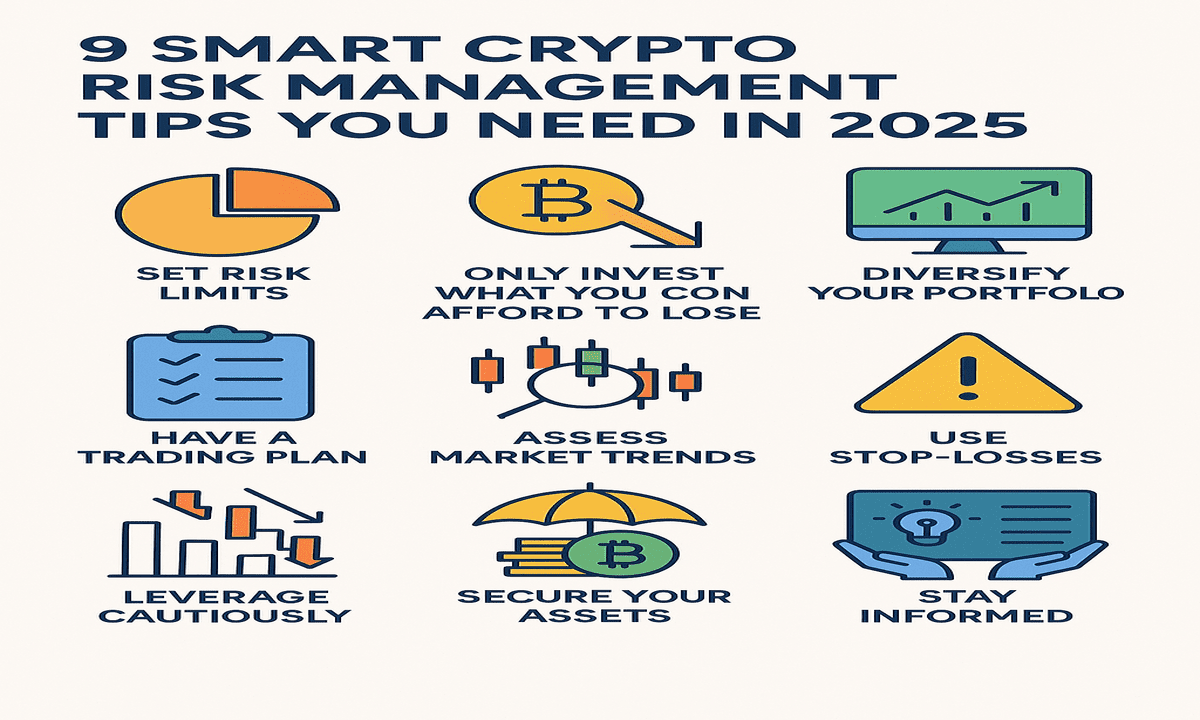
Top 9 Crypto Risk Management Tips for 2025 - Investors Collective
Risk Management In Crypto Explained & Examples

Risk Management in Crypto Explained & Examples
🚀 Start Your Crypto Journey
Join millions of traders on trusted exchanges
✓ Low fees | ✓ Secure | ✓ Easy to use
Start Trading →